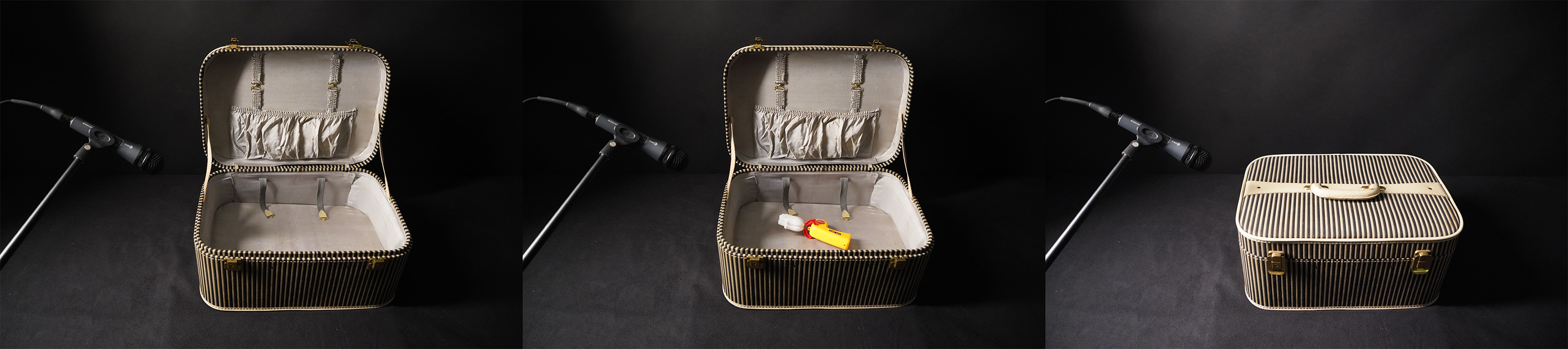
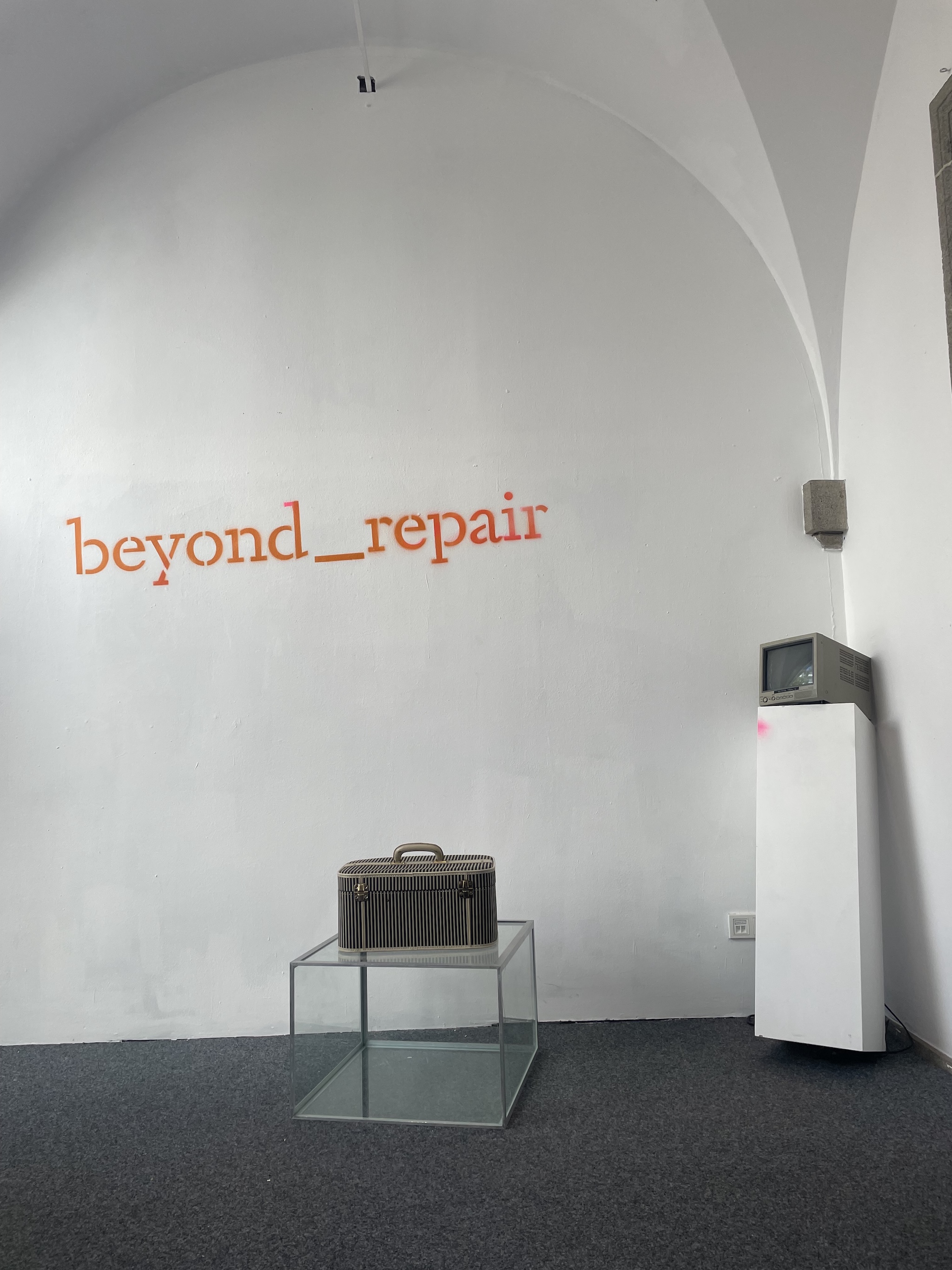
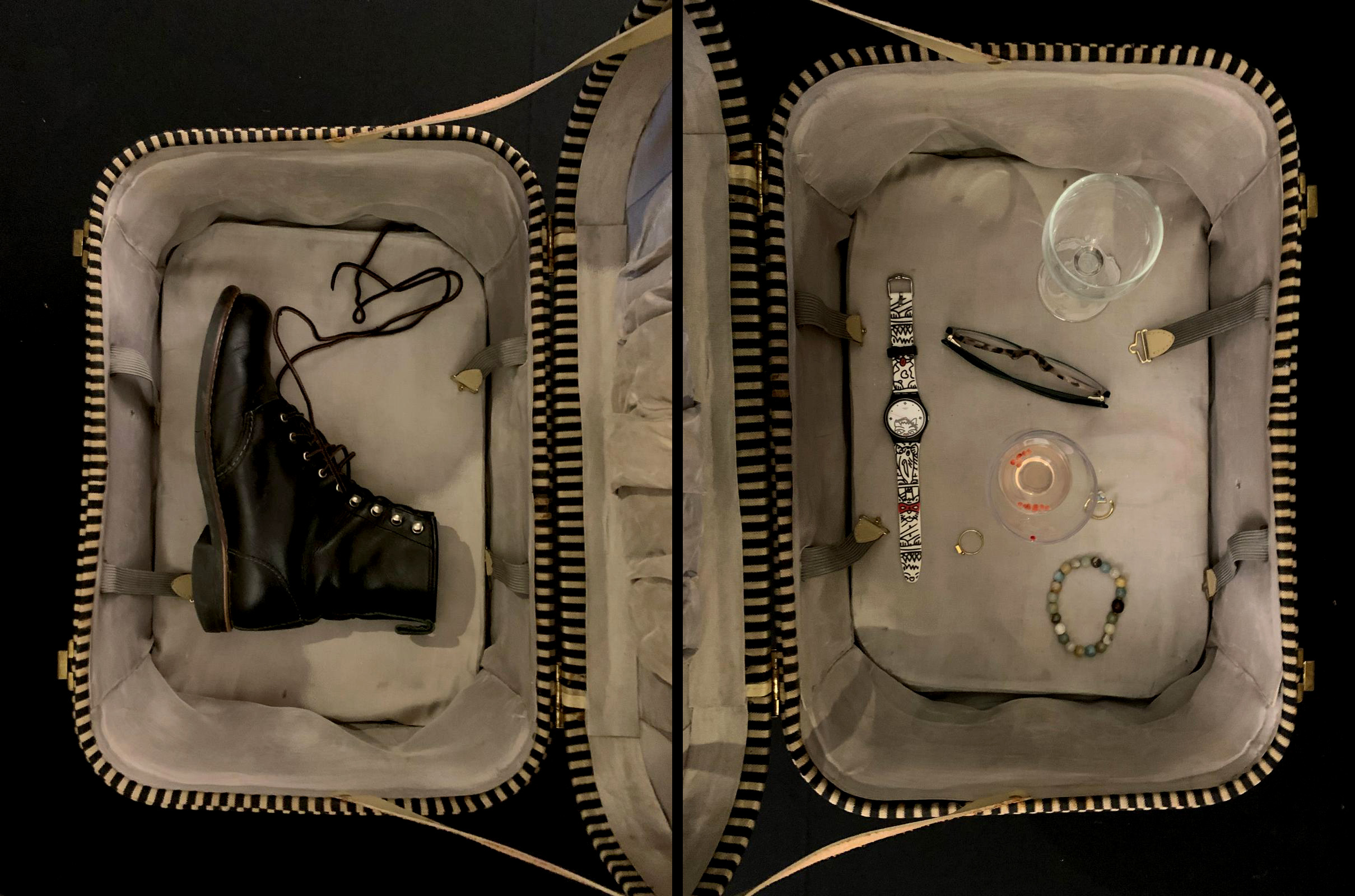
Sweepcase is an old suitcase, found at a flea market, that waits open and empty. We invite our audience to put into it whatever they happen to carry, a key, a glove, a lighter, a stone picked up on the way. When the lid is closed the suitcase begins to sound, and only for as long as it stays closed. The objects remain hidden, and what reaches the audience is their weight, their place and their colour, heard as a sound shaped by this one arrangement of things.
What the suitcase holds
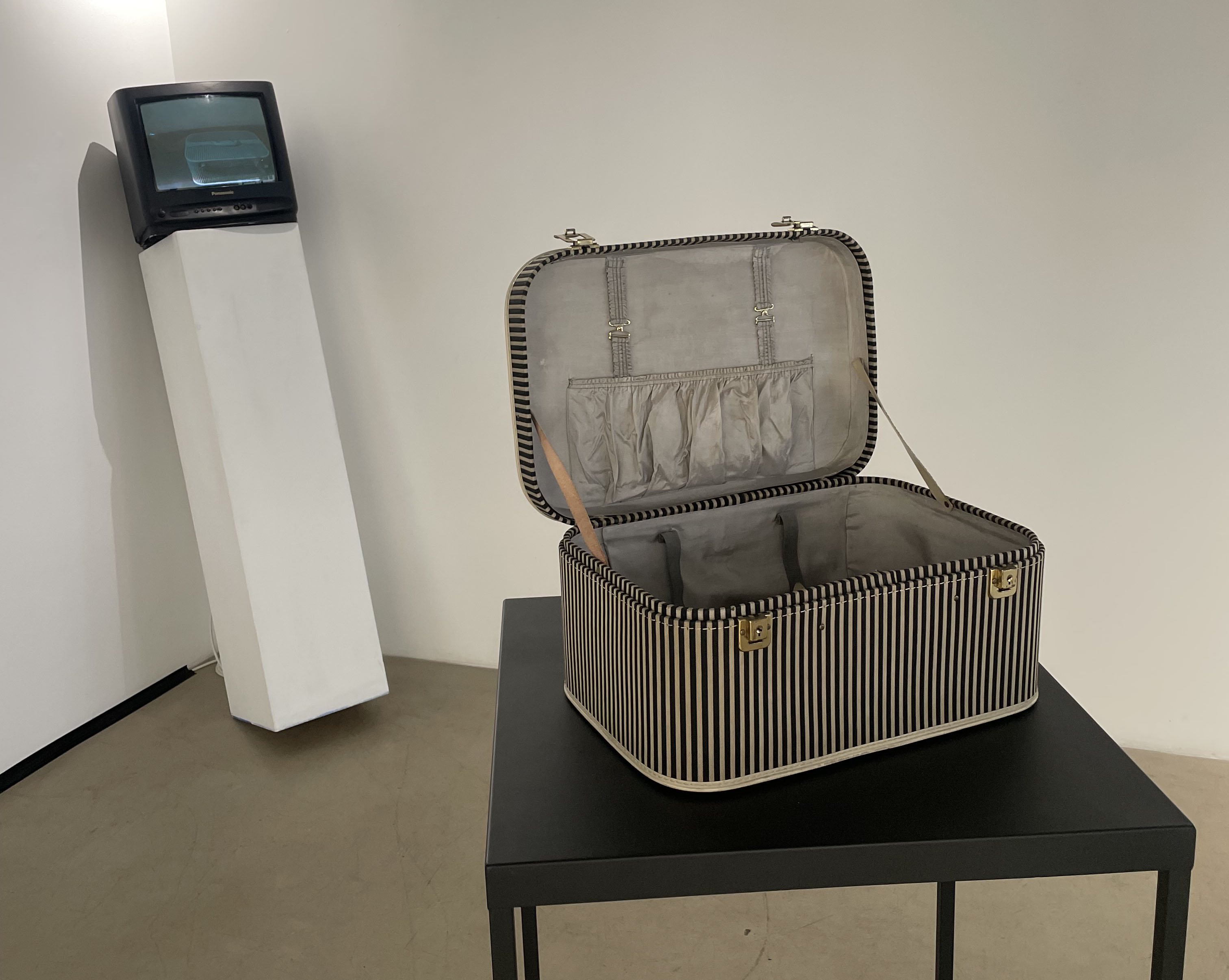
Suitcases have long served artists as archives of memory, of journeys, exile and personal history, and Marcel Duchamp's Boîte-en-valise carried a whole body of work in miniature. Sweepcase keeps the suitcase and leaves it without content of its own. What it holds is brought each time by someone else, chosen in a moment and taken back a moment later, so that the work is completed anew with every visitor and authorship is shared between the artists, the suitcase, the objects and the people who fill it.
Nothing has to be learned to play it. The familiar gestures of a suitcase, lifting it by the handle, opening, filling, closing and locking it, are the entire interaction, and the suitcase itself, rather than anything presented inside it, becomes the place where attention gathers.
Listening to what is hidden
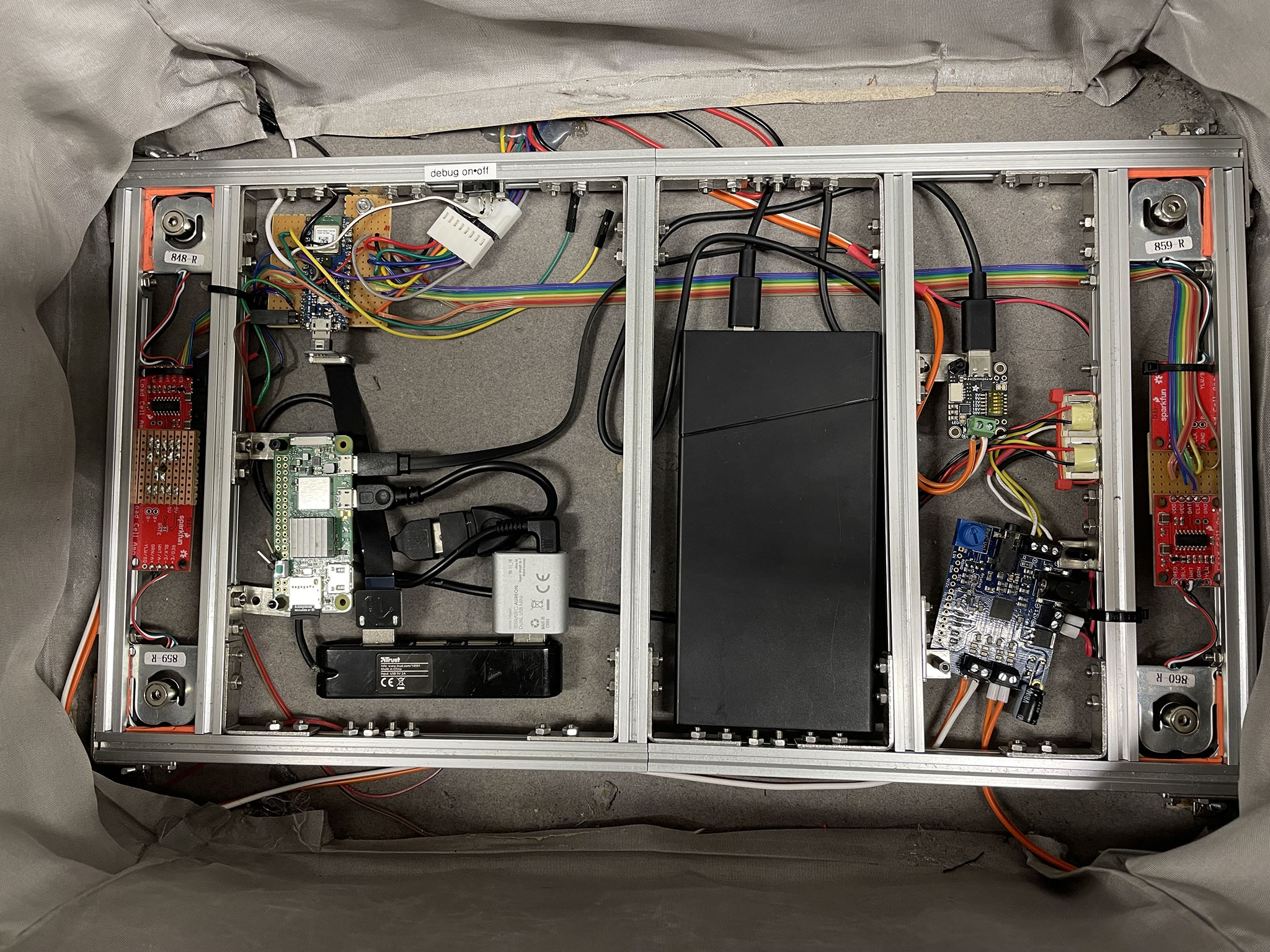
The suitcase does not try to recognise its content or to give it a name. It listens to what the objects are, how heavy they are, where they rest and which colour they reflect, and lets these qualities shape a soundscape that sounds from within its walls. A heavy object resonates differently from a light one, a bright one differently from a dark one, and several objects together produce a sound that none of them would make alone. Opening the case ends the sound, so that seeing and hearing never meet, and the things we carry every day can be heard as material, before they are recognised as useful.
Exhibitions
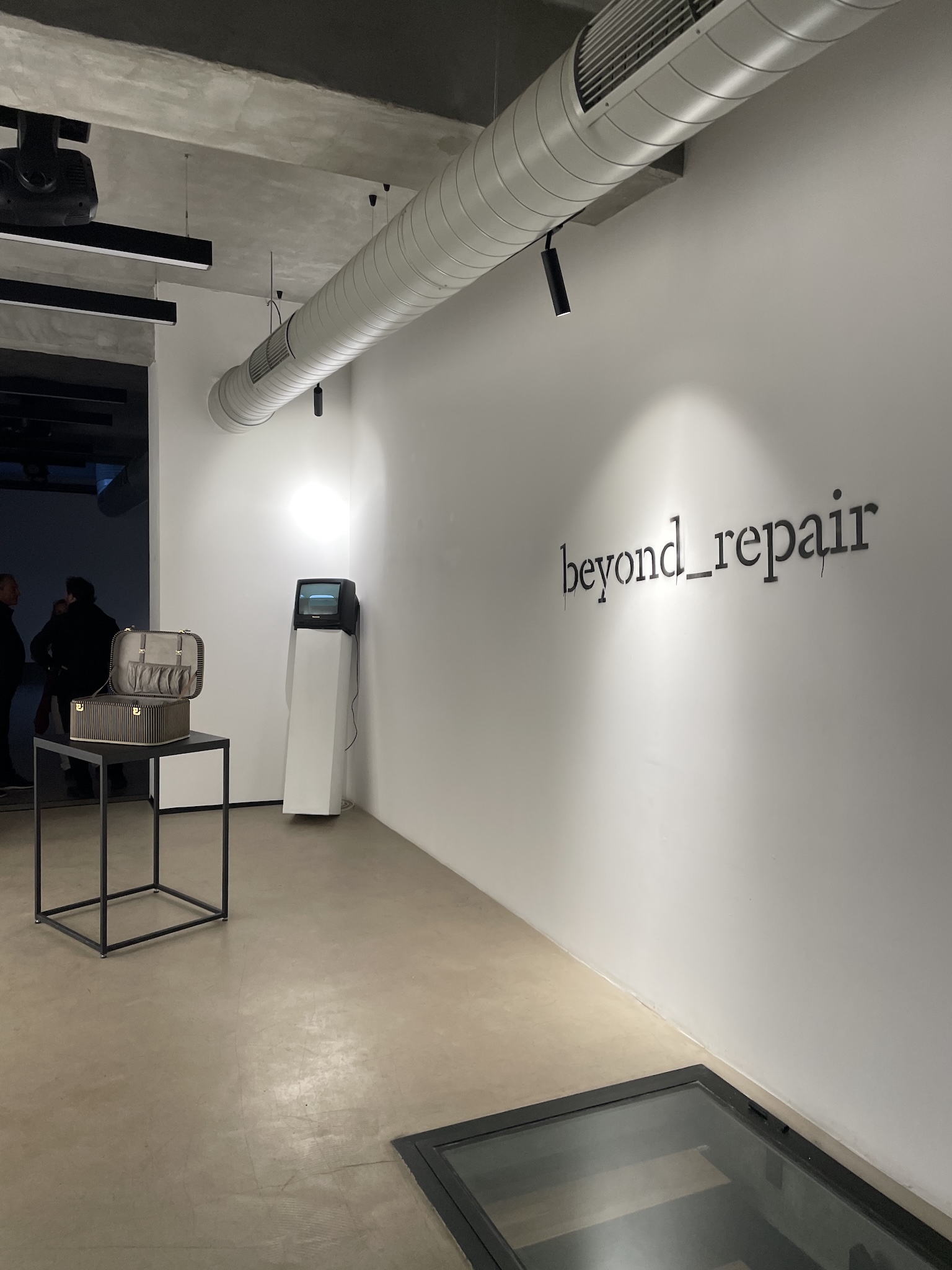
October 2025, DAFEST #10, Sofia, Bulgaria
Exhibited at Doza Gallery within DAFEST #10, the Digital Arts Festival in Sofia.
September 2025, Ars Electronica Festival, Linz, Austria
Exhibited at the University of Arts Linz in the group exhibition /decisions/make/art
Curated by Venelin Shurelov with the Master's Program in Digital Arts of the National Academy of Art Sofia
as part of the Ars Electronica Festival 2025 PANIC, yes/no.
4–7 March 2025, TEI 2025, Bordeaux, France
First shown at the Museum of Contemporary Art, Bordeaux, in the arts exhibition of TEI 2025, the International Conference on Tangible, Embedded, and Embodied Interaction, which took Duchamp's Boîte-en-valise as its theme.
beyond_repair art & research collective
Antoni Rayzhekov and Martin Murer are interdisciplinary artists and researchers working at the intersection of music, interaction design, and creative technology. Together, they form the art and research collective beyond_repair, exploring new relationships between everyday objects, hybrid instruments, and artistic expression. Combining perspectives from experimental music, human-computer interaction, and design research, they investigate how everyday materials can become expressive interfaces. Their work aims to contribute equally to artistic practice and academic research.
Sweepcase, 2024/2025
beyond_repair (Antoni Rayzhekov & Martin Murer)
interactive sound installation
found suitcase, load cells, RGB light sensor, two speakers, electronics, custom software
Antoni Rayzhekov and Martin Murer. 2025. Sweepcase: (Un)Packing Arbitrary Objects for Tangible Interaction. In Proceedings of the Nineteenth International Conference on Tangible, Embedded, and Embodied Interaction (TEI '25), Bordeaux / Talence, France. doi.org/10.1145/3689050.3707680
The project is realised with the support of III.Lab (Intelligent Interfaces Innovation), funded by AIT Austrian Institute of Technology, University of Salzburg and Land Salzburg under grant number 20102/F2300416-KZP.