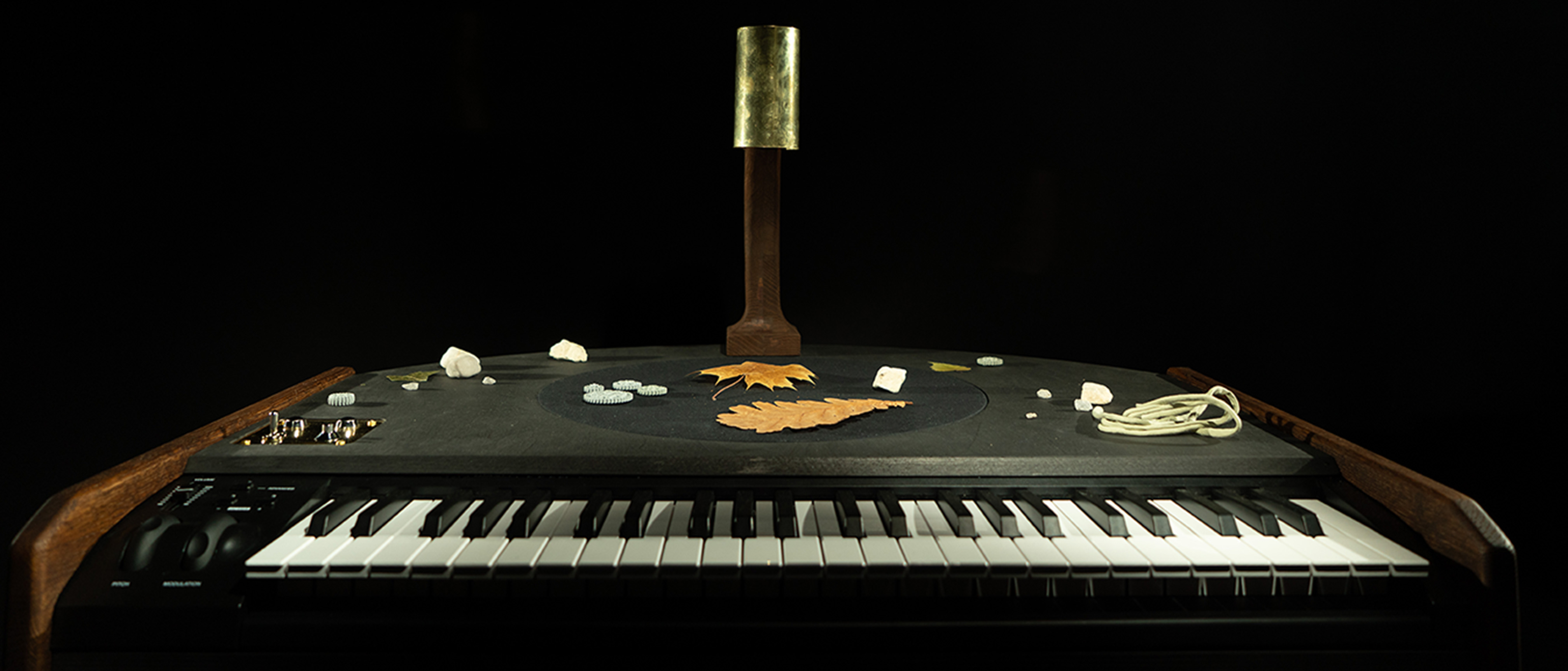
The Readymade Synth is an instrument that transforms ordinary, unmodified objects into sound. The shapes of the objects directly determine the spectral characteristics of the synthesized sound. Any object placed on the sensing surface of the instrument immediately becomes timbre without any previous modification or preparation. A keyboard controls pitch and timing, while the arrangement and geometry of everyday objects shape timbre and further sonic properties. The instrument invites musicians to explore the sonic potential of familiar things, turning everyday materials into an open-ended vocabulary for musical expression.
Readymades: Everyday objects as musical material
What if a coffee cup, a childhood toy, or a found object could become part of a musical instrument without being modified in any way? Inspired by the artistic tradition of the "readymade", our instrument challenges what an instrument can be and what it can be made of. Everyday objects become musical material, not only through their physical shapes but also through the meanings we associate with them. Their familiarity, personal histories, and cultural significance create a connection between sound, material culture, and human experience, opening up new possibilities for musical expression and storytelling.
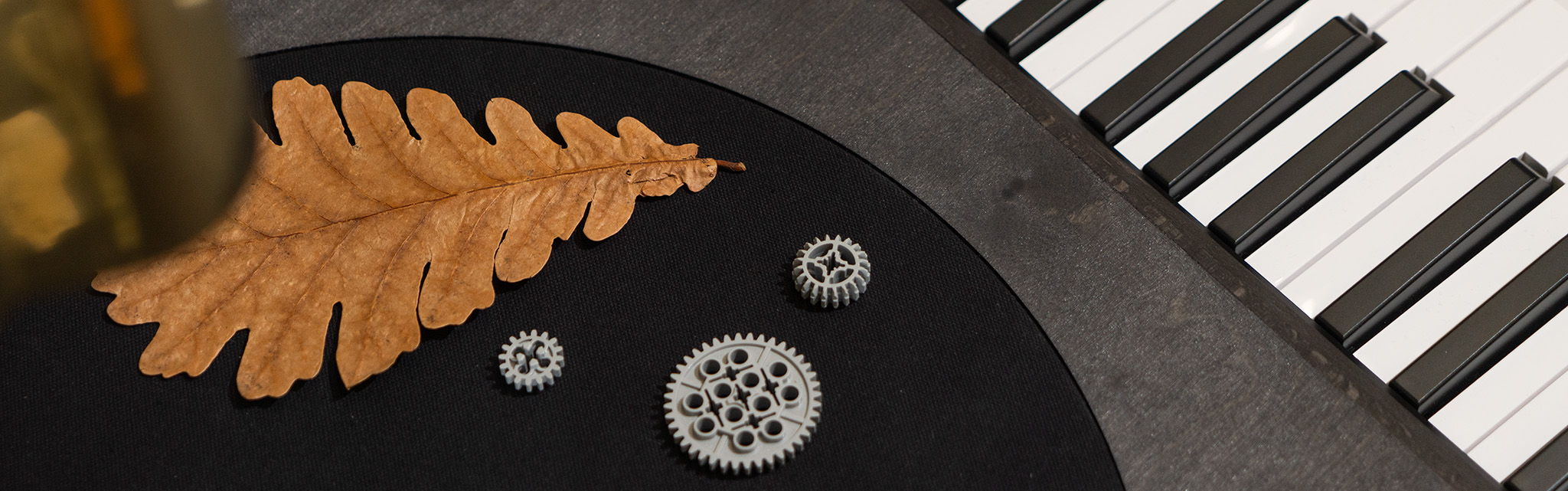
The Readymade Synth is inspired by the tradition of preparing acoustic instruments with physical objects. Here, however, everyday things shape electronically generated sounds. Musicians can change the character of a sound by exchanging, moving, or rearranging unmodified everyday objects, while playing on the keyboard. This makes musical performance an exploration of the physical world, where rich sounds emerge from familiar things. At the same time, the objects bring their own associations, memories, and cultural meanings into the performance, allowing music to become a dialogue between sound, material, and story.
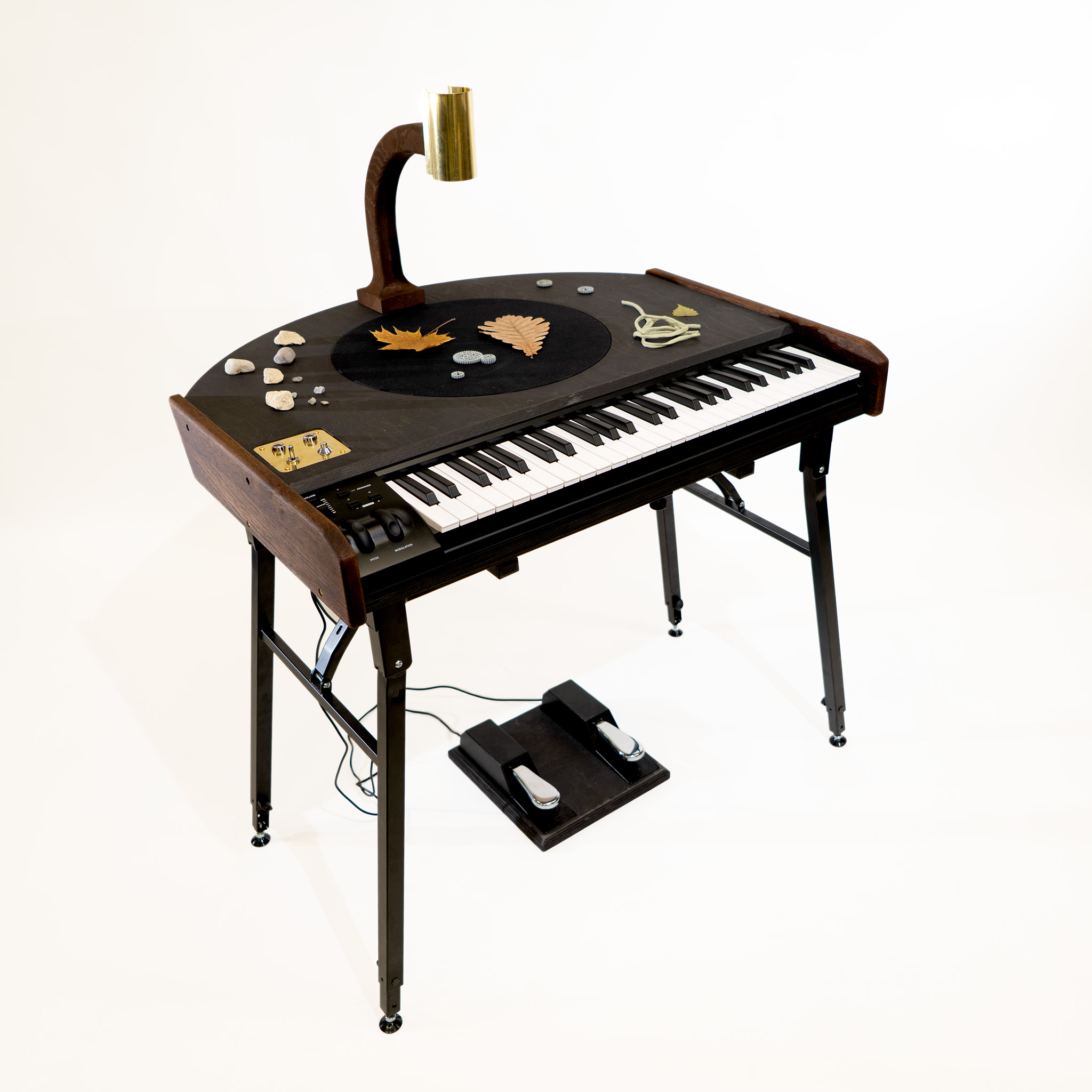
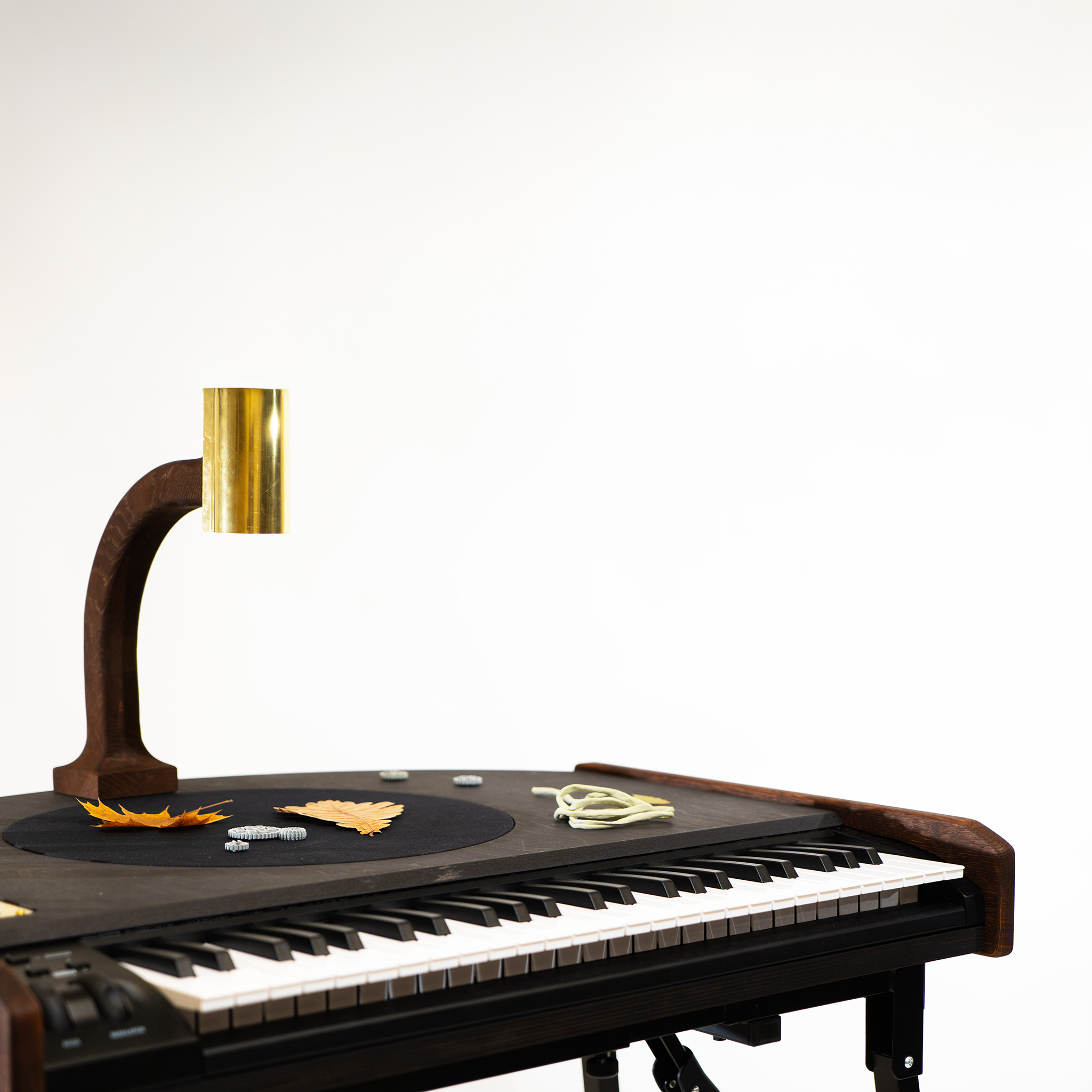
Prepared Synthesis: From contour to spectrum
The Readymade Synth establishes a direct connection between the physical geometry of everyday objects and synthesized sound. A computer vision system captures the objects' contours, which are mathematically decomposed using elliptic Fourier descriptors and translated into sound spectra.
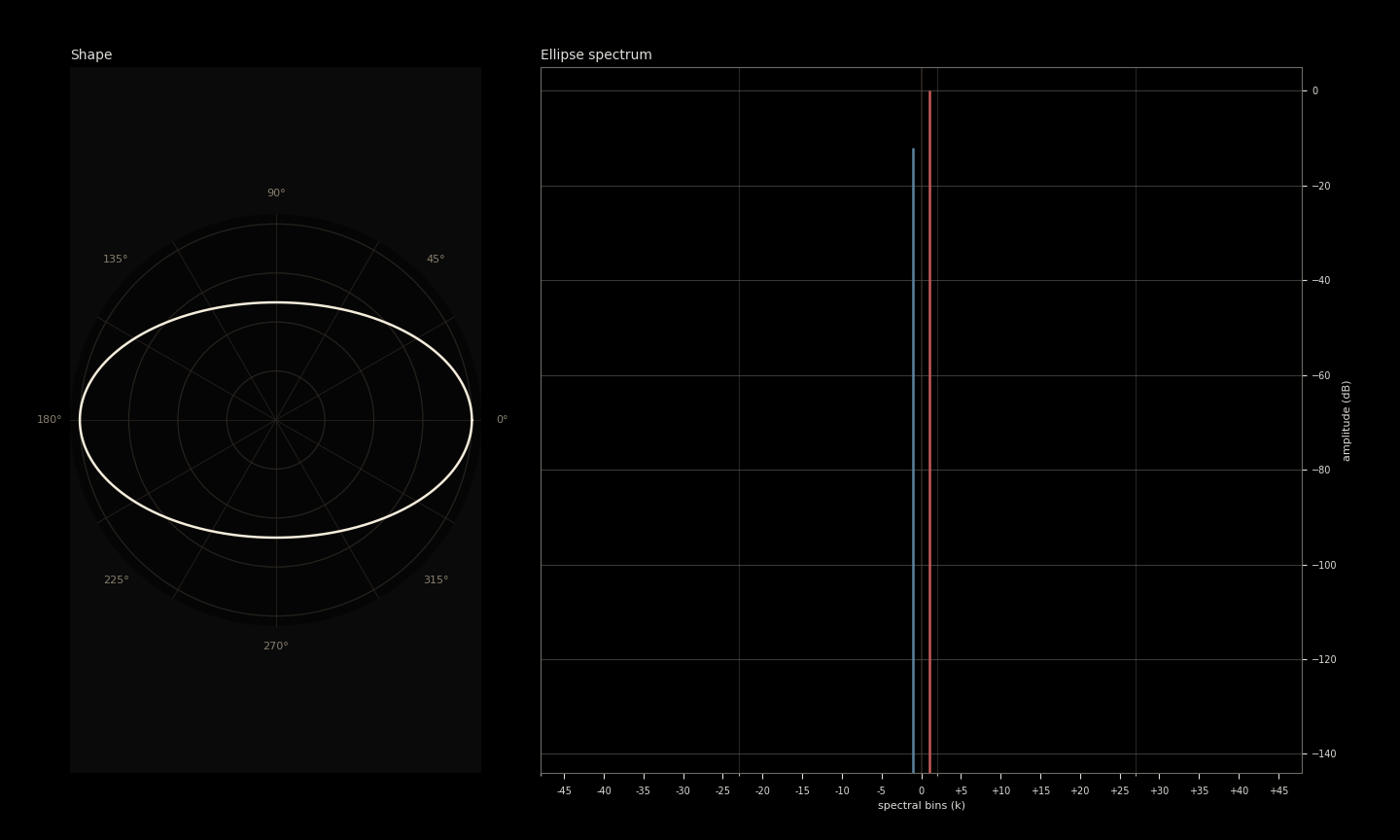
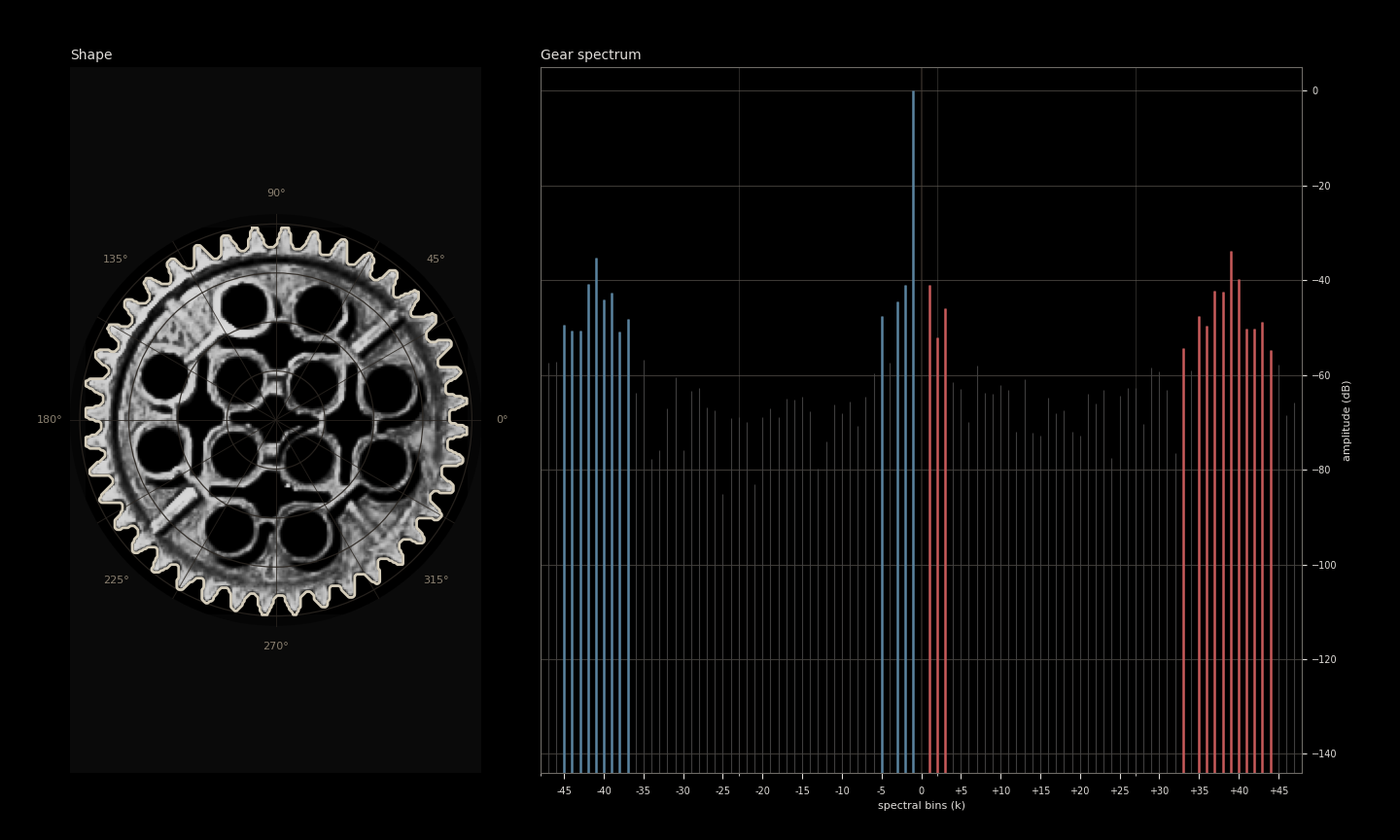
Banks of sine-wave oscillators then resynthesize these spectra into audible sounds. Rather than recognizing objects or triggering predefined samples, the instrument derives its sounds directly from the objects' geometry.
Besides its contour, the size of an object shapes the articulation of the sound, where small objects sound short and percussive, whereas large ones rise slowly and fade over several seconds. Its position on the surface sets its place in the mix, as objects near the centre sound louder and the angle around the circle defines the stereo panning. Several objects on the surface blend into one composite timbre, so that arranging them becomes a form of composition.
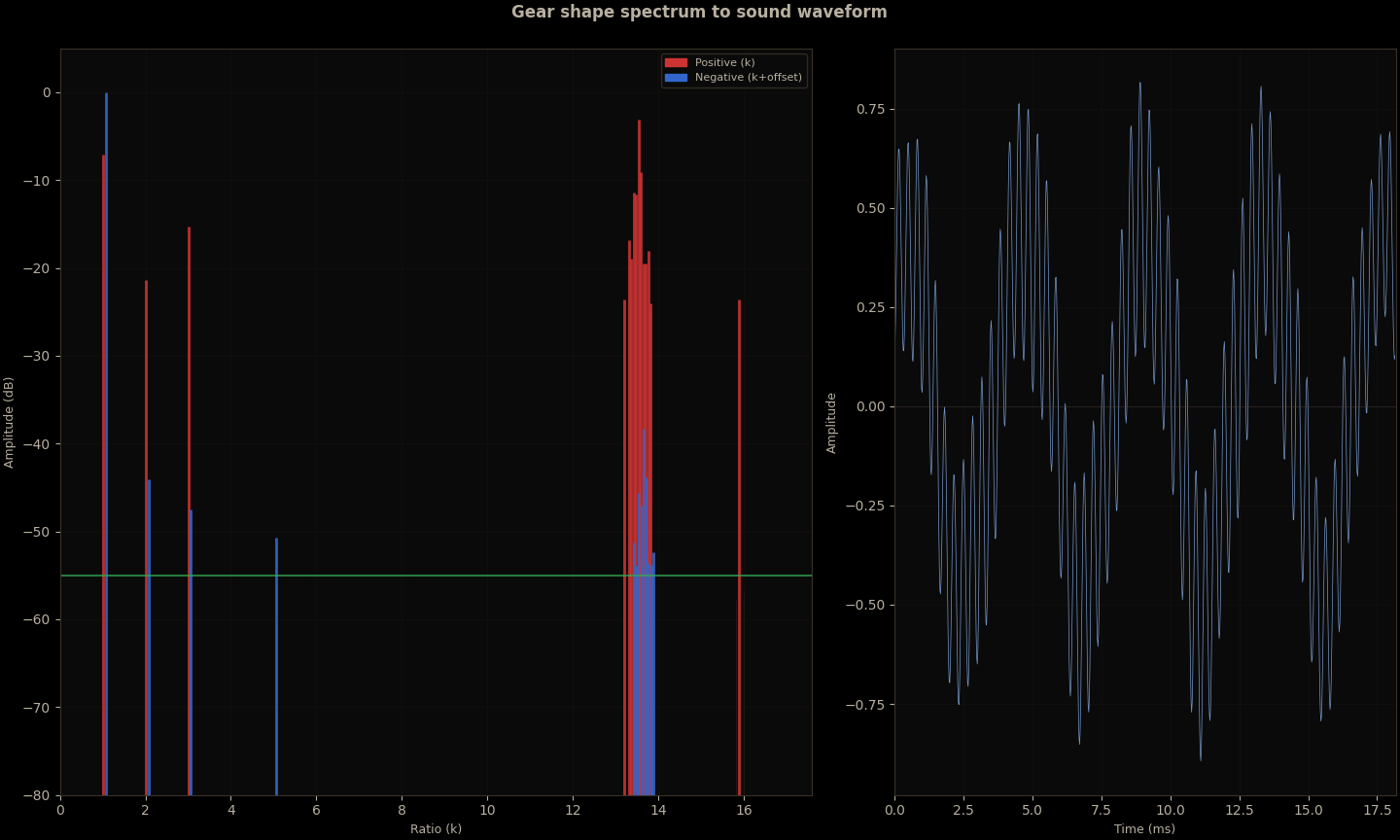
Objects can be used immediately, without modification or prior registration. Combined with a MIDI keyboard for pitch and timing, this approach enables musicians to explore and perform with the sonic characteristics of everyday objects.
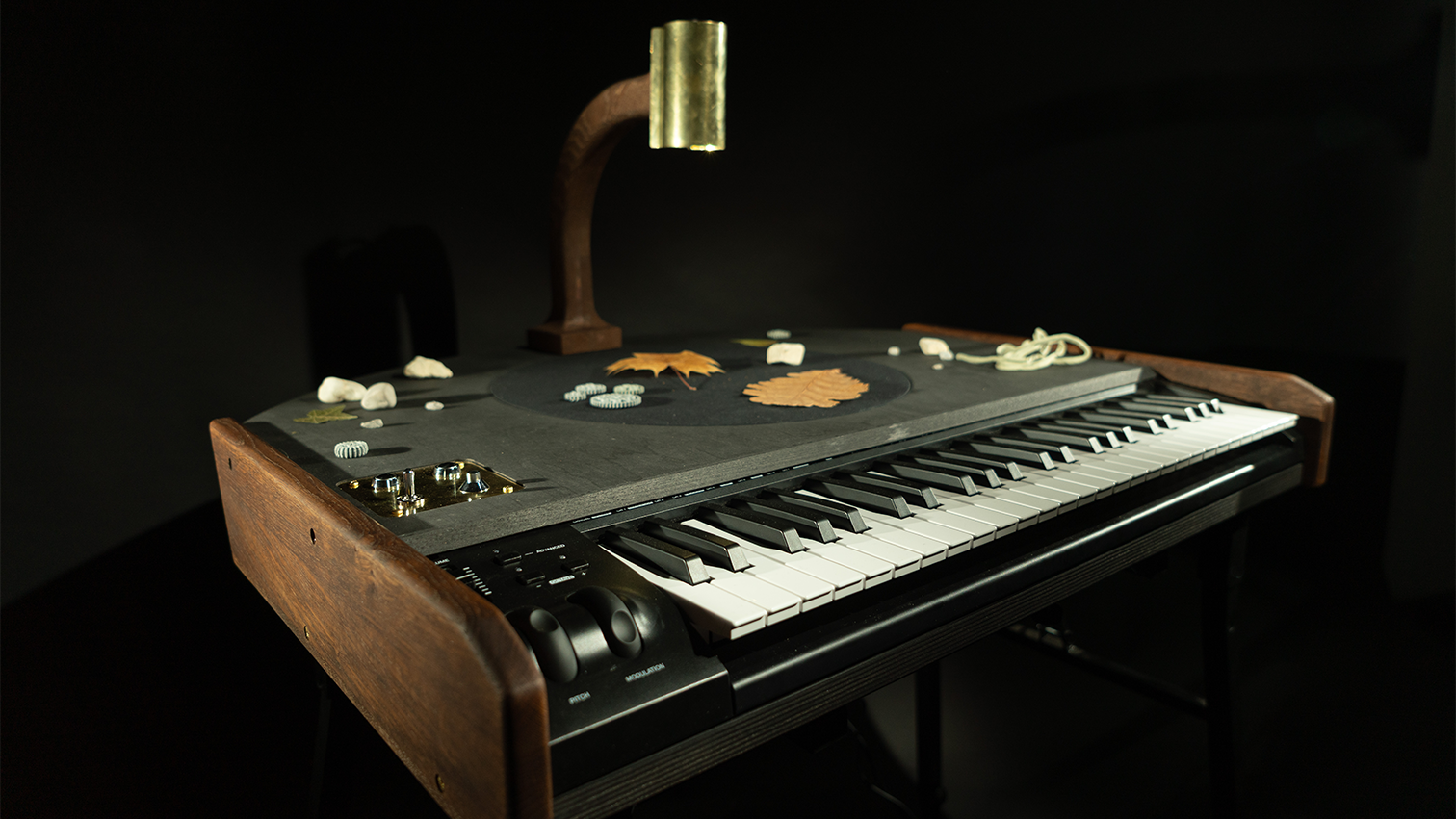
The software
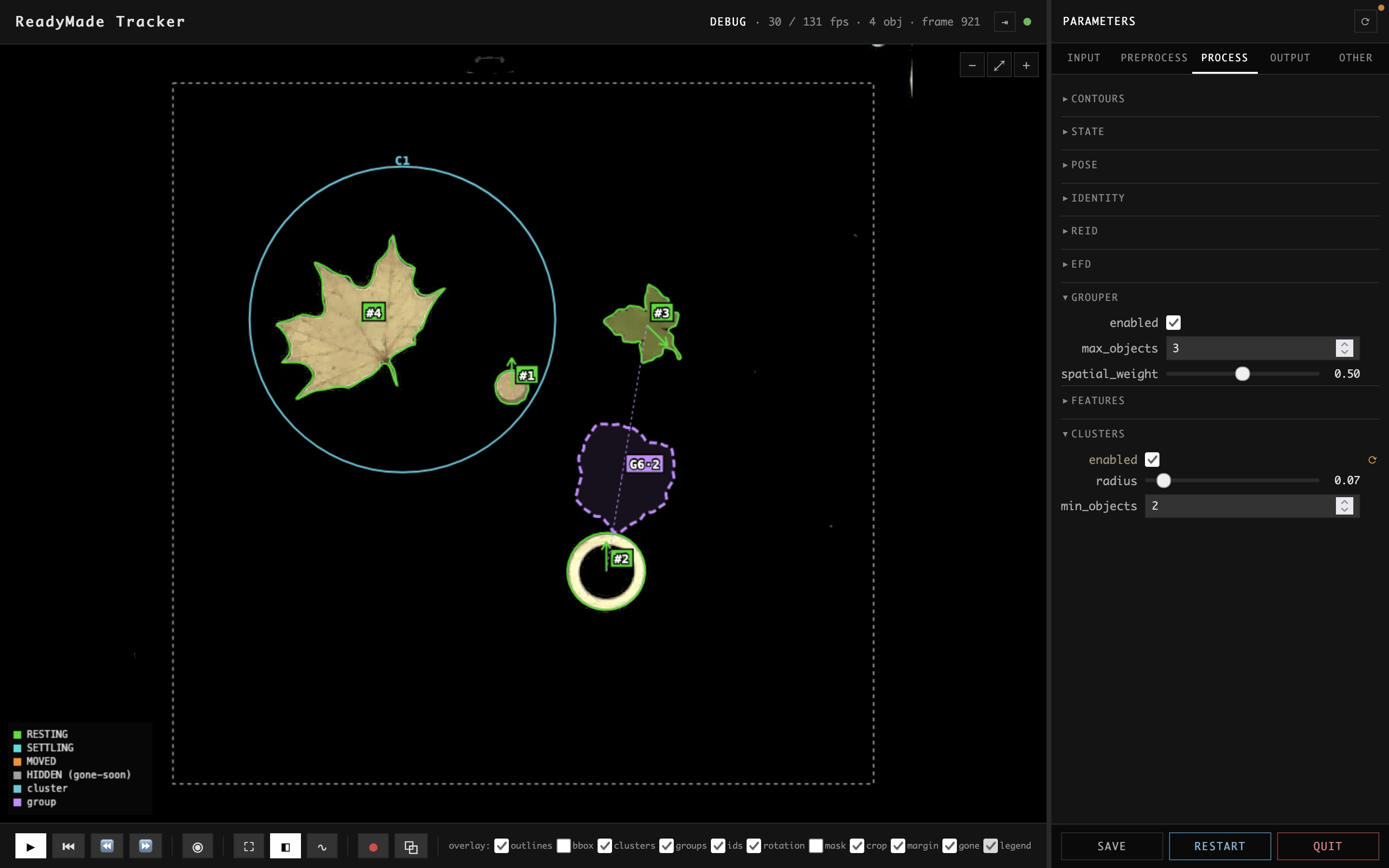
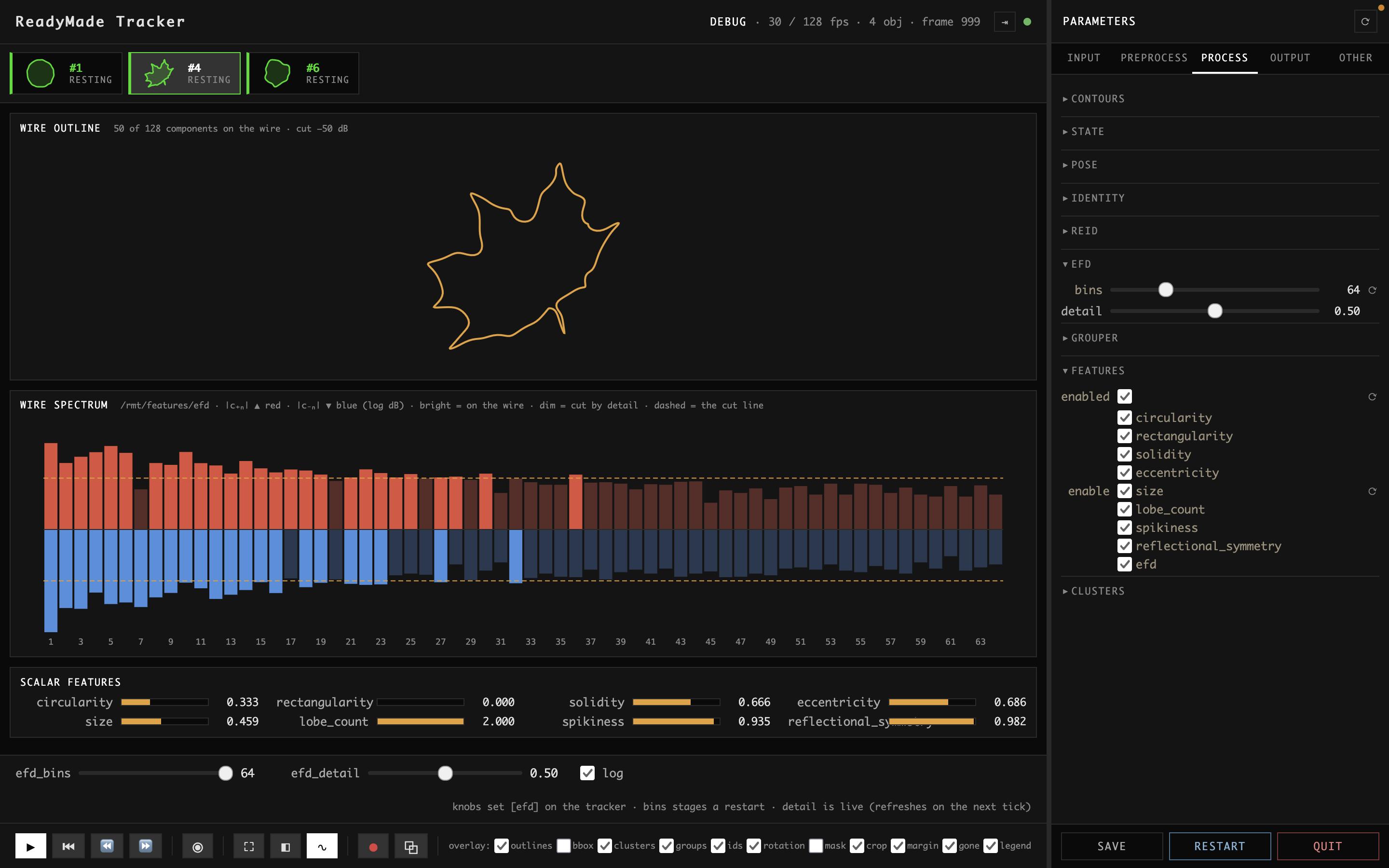
In its current version, the instrument runs on our own custom software, that observes the sensing surface through the IR camera and captures every object placed on it. Each object keeps its own identity while it rests, settles or moves, and objects lying close to each other can be grouped into clusters that sound together. For every outline the software computes a set of elliptic Fourier components, which form the spectrum sent to the synthesizer (written in SuperCollider), together with scalar features such as circularity, symmetry or spikiness. A browser-based interface shows this process as it happens, where the outline of an object appears next to its spectrum, and the parameters of tracking and analysis can be adjusted while playing.
Exhibitions
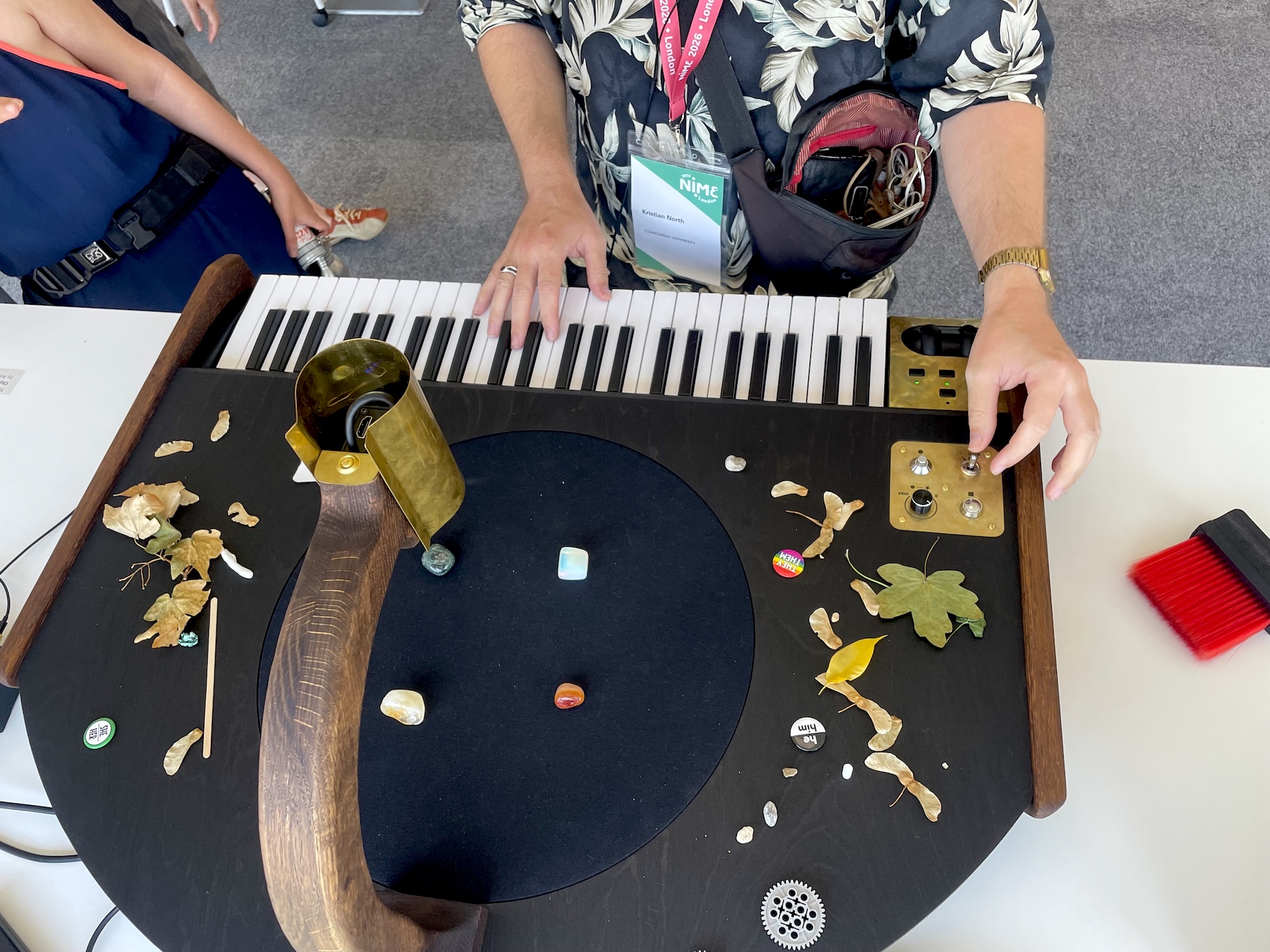
23–26 June 2026, NIME, London, UK
Presented at NIME 2026, the International Conference on New Interfaces for Musical Expression, where the accompanying paper "The Readymade Synth: Prepared Synthesis with Everyday Objects" received the Best Paper Award.
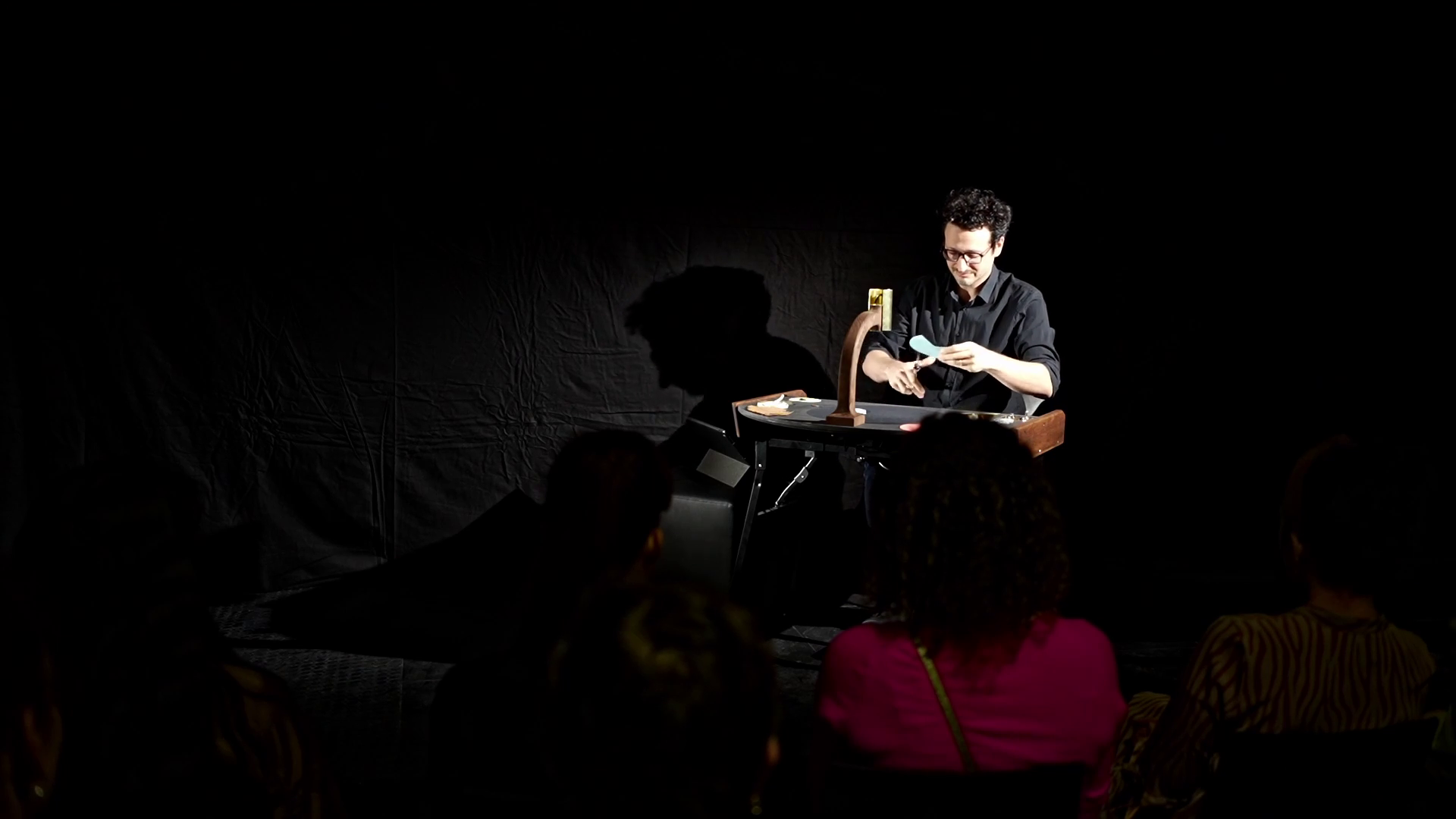
6 February 2026, Open rehearsal at the Center for Human-Computer Interaction, University of Salzburg, Austria
The composition "In Advance of the Broken Sine, for Readymade Synth, three plastic gears, four geometric shapes, pavement grit, a white thread and a handful of leaves", was developed together with the performer and composer Matthias Leboucher over five sessions. It spans about twenty minutes of structured improvisation in three movements. The piece was first presented in an open rehearsal for an audience of musicians, producers, visual artists and researchers.
beyond_repair art & research collective
Antoni Rayzhekov and Martin Murer are interdisciplinary artists and researchers working at the intersection of music, interaction design, and creative technology. Together, they form the art and research collective beyond_repair, exploring new relationships between everyday objects, hybrid instruments, and artistic expression. Combining perspectives from experimental music, human-computer interaction, and design research, they investigate how everyday materials can become expressive interfaces. Their work aims to contribute equally to artistic practice and academic research.
The Readymade Synth, 2026
beyond_repair (Antoni Rayzhekov & Martin Murer)
hybrid musical instrument
oak, brass, felt, 49-key MIDI keyboard, infrared camera, foot pedals, custom software, everyday objects
84 × 98 × 72 cm
Collaborating performer and composer: Matthias Leboucher
Antoni Rayzhekov and Martin Murer. 2026. The Readymade Synth: Prepared Synthesis with Everyday Objects. In Proceedings of the International Conference on New Interfaces for Musical Expression (NIME '26), London, UK. Paper · Source code
The project is realised with the support of III.Lab (Intelligent Interfaces Innovation), funded by AIT Austrian Institute of Technology, University of Salzburg and Land Salzburg under grant number 20102/F2300416-KZP.