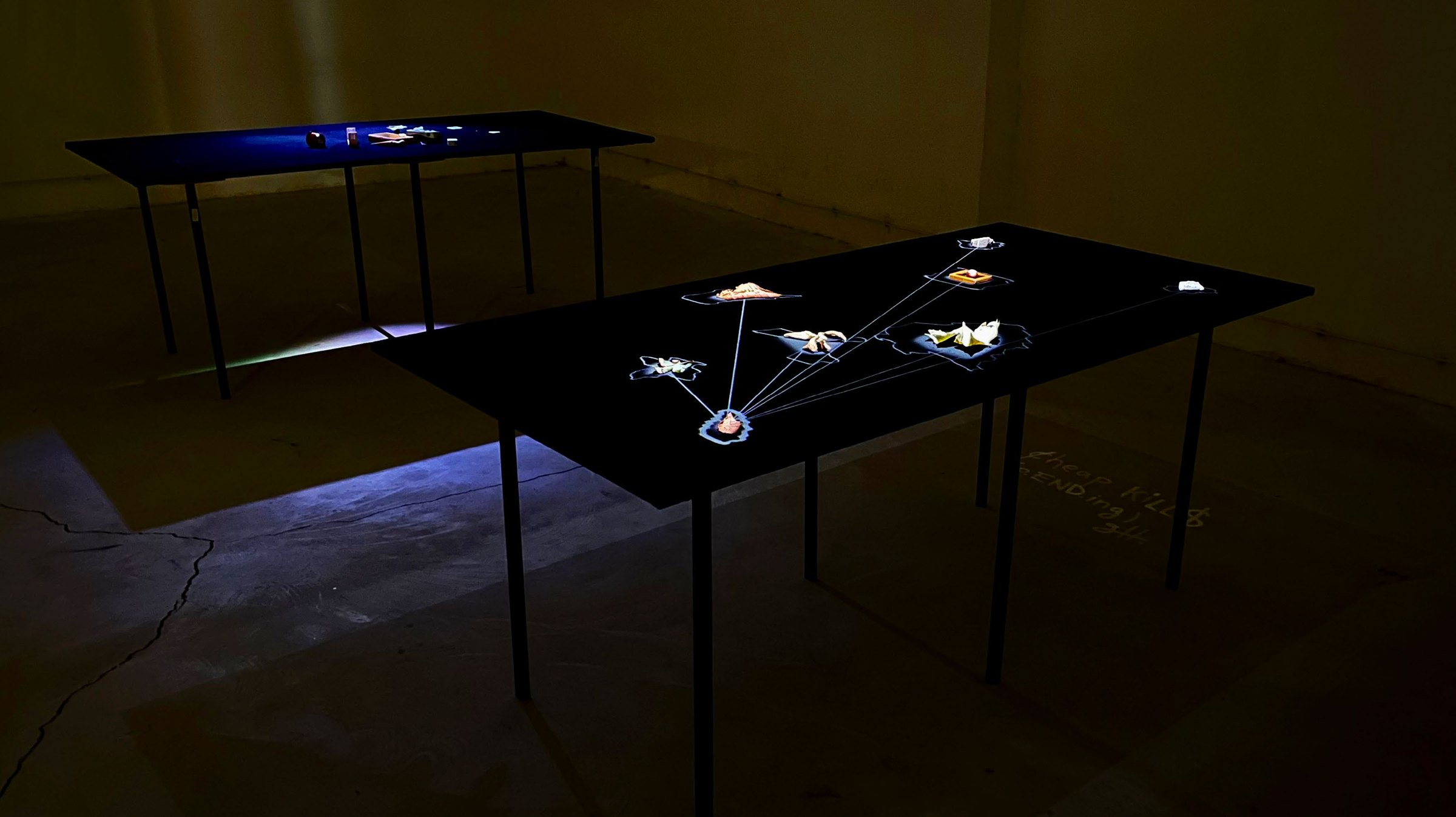
Well-Tempered Objects is an interactive post-digital music installation. It invites visitors to place everyday objects and found artefacts, stones, leaves, keys, whatever they carry, onto a specially designed interactive table. Each object is transformed in real time into sound, its outline “unfolded” into an audible form through computer vision and sound synthesis, revealing a direct translation of shape into timbre. Larger objects produce deeper tones, whereas smaller ones generate higher pitches. Objects placed close together are interpreted as a radial sequencer, introducing rhythm. Projection mapping animates the objects from above, so that sound and image emerge from the same physical source.
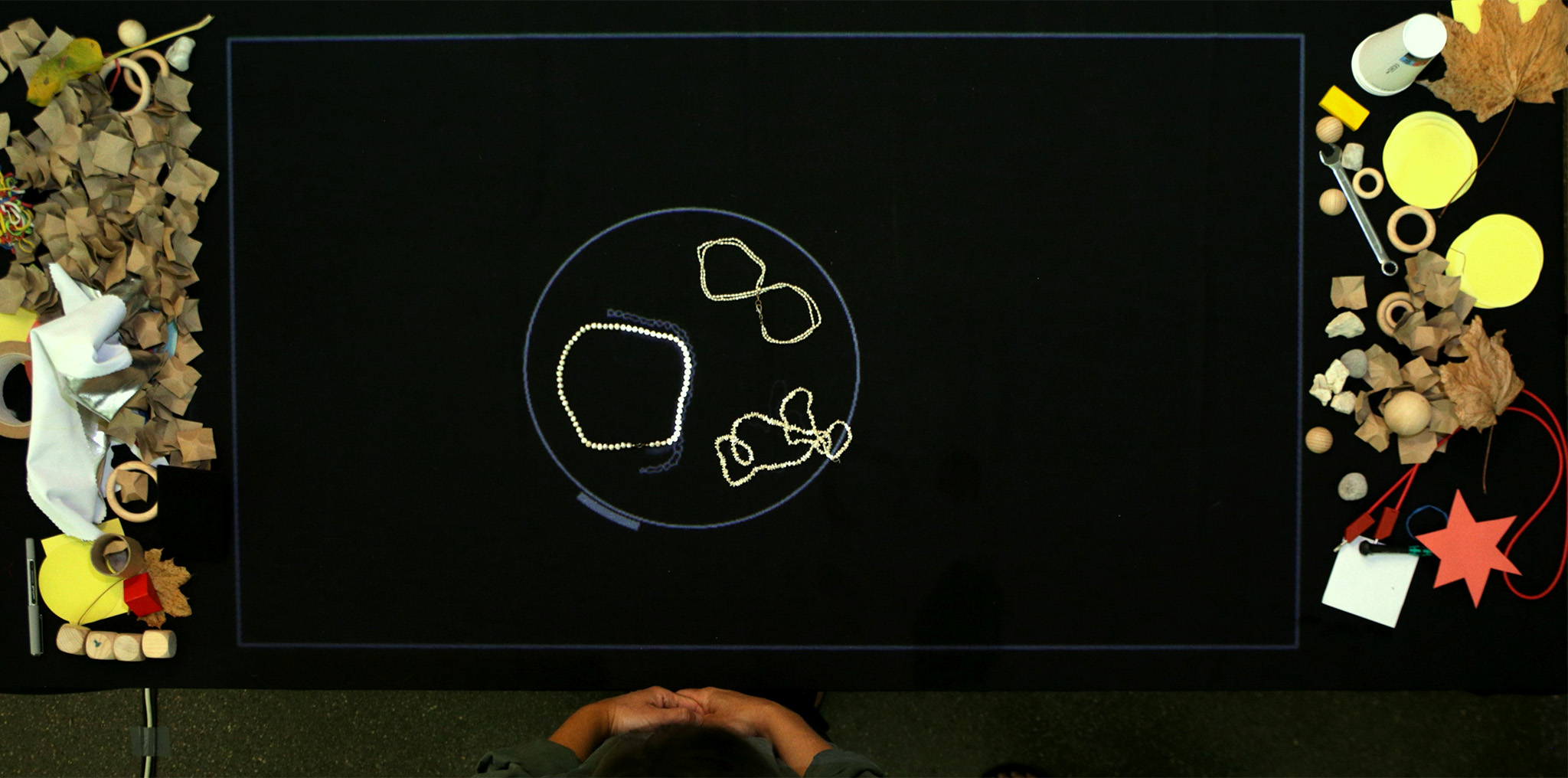
The audience is invited to bring and donate their own objects, adding a personal and communal dimension. The installation constantly evolves, reflecting the contributions of its participants. Each constellation of objects produces a unique and unrepeatable composition, a collaborative instrument shaped by the material world its audience carries with them.
Everything in tune
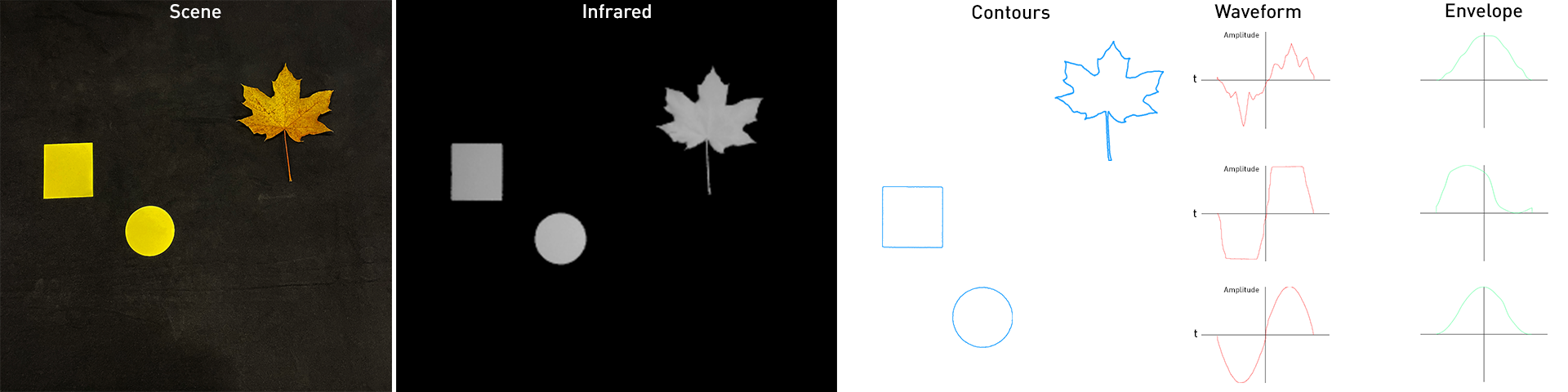
In 1722 Bach wrote the Well-Tempered Clavier to show that a single tuning could carry music through every key without any of them sounding false. Well-Tempered Objects extends this temperament to arbitrary things. Whatever is laid on the table is given a voice from its shape alone, its outline unfolded into a waveform that sets the timbre and the rise and fall of the sound, where a round pebble hums close to a sine wave and a jagged leaf carries a rougher tone. Its size sets the pitch, and its proximity to the other objects on the tabletop decides whether it sounds alone or takes its turn in a rhythm shared with its neighbours. Nothing is recognised and nothing is named, and the objects, however different in origin and use, are tuned to sound together in one space.
Donated things
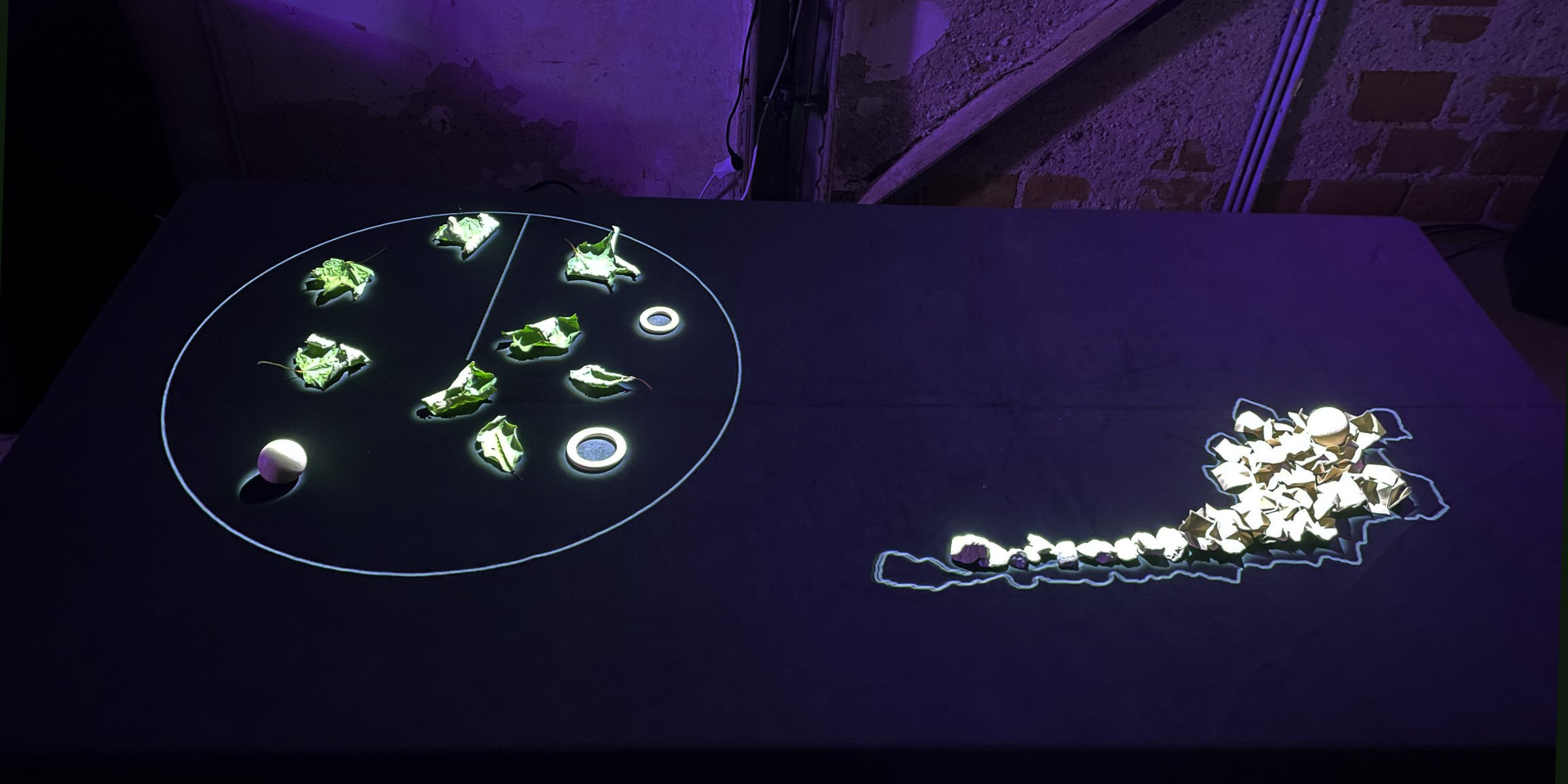
Visitors are invited to bring their own objects and to leave them on the table, so that the installation grows with its audience and no two evenings sound alike. A pearl necklace, laid down in a loop, draws a line that cannot break and cannot turn sharply, and the sound follows the necklace's own rules. A handful of shells pushed together is read as a single large body, deep and slow, until someone separates them again. The composition is never finished and never belongs to one person, whereas each constellation on the table, made of what people happened to carry, sounds once and is gone when the next hand moves it.
Lineage
Well-Tempered Objects continues a way of working with found things that began with RE_SONANCE in 2017 and Suite fantastique with Frauke Aulbert in 2018, where blank sheets of paper and small objects shaped the sound of a piano. The experience of audiences at the table led in turn to The Readymade Synth in 2026, where the same principle became a playable instrument. The work forms part of Antoni Rayzhekov's doctoral research at the Center for Human-Computer Interaction of the University of Salzburg, supervised by Manfred Tscheligi and Martin Murer.
Exhibitions
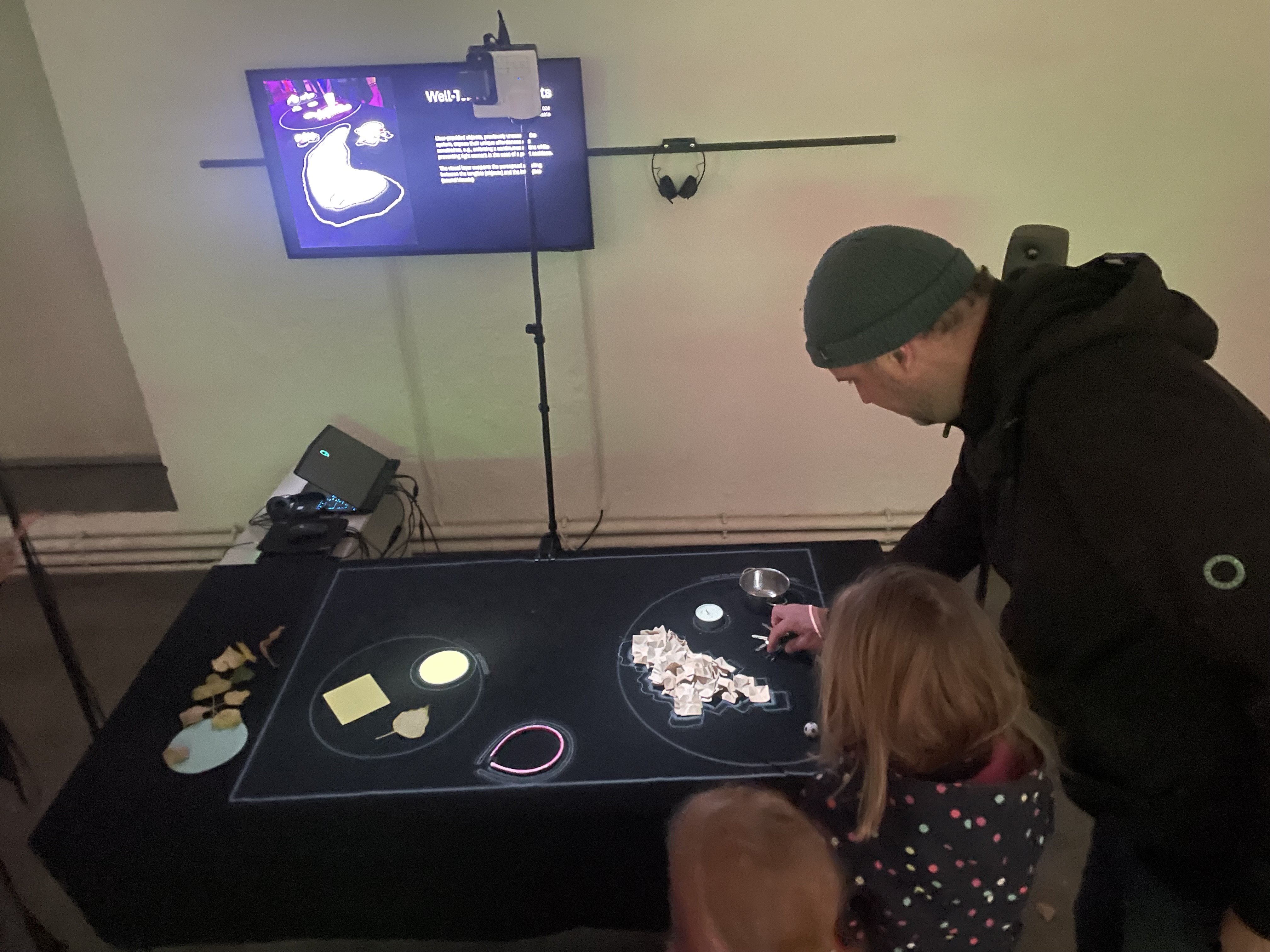
2025, ECOCIDE Symposium, Lothringer13 Halle, Munich, Germany
Shown within the ECOCIDE symposium at Lothringer13 Halle.
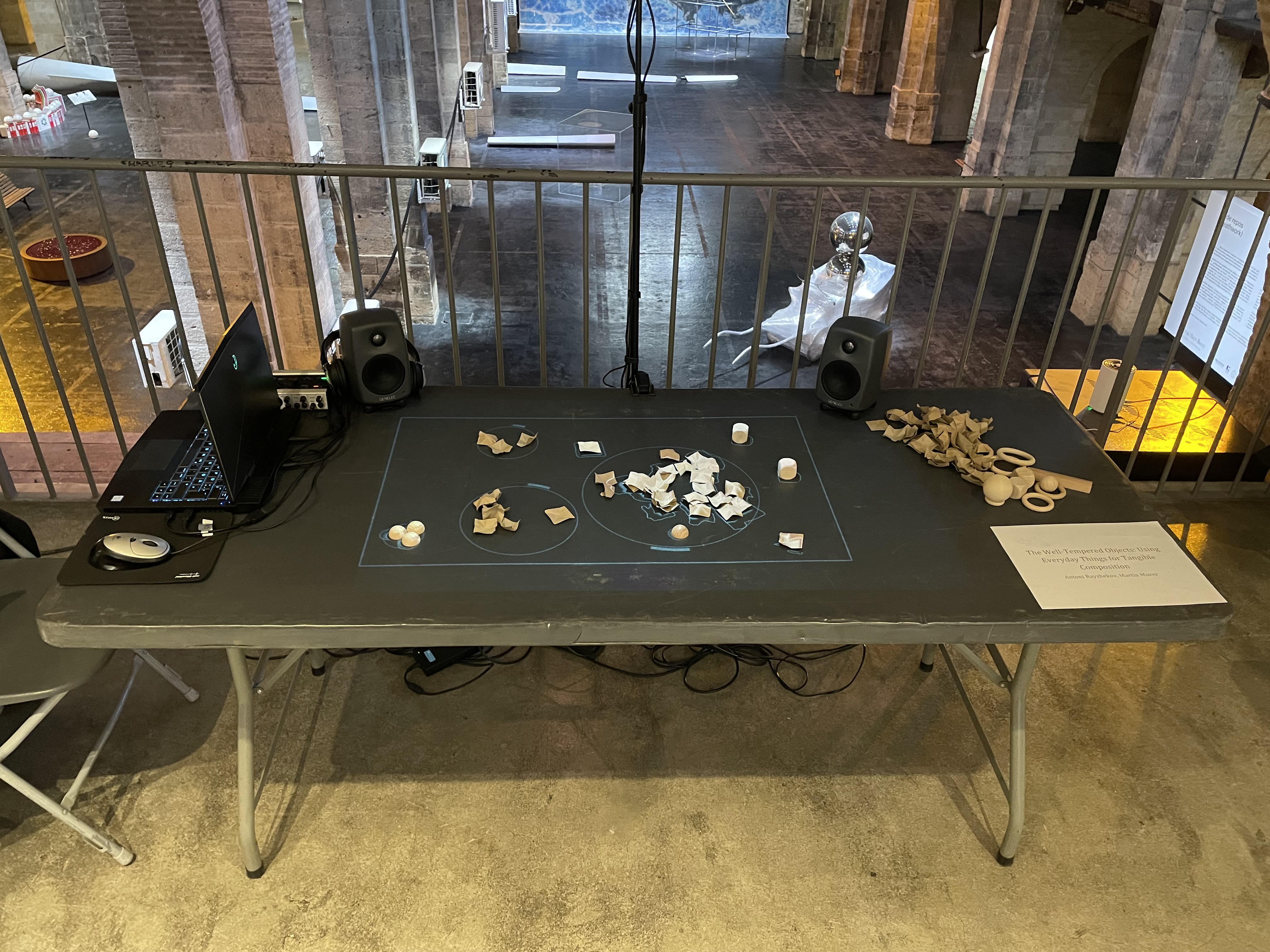
4–7 March 2025, TEI 2025, Bordeaux, France
Exhibited at the CAPC Museum of Contemporary Art, Bordeaux, in the arts exhibition of TEI 2025, the International Conference on Tangible, Embedded, and Embodied Interaction, where the accompanying paper "The Well-Tempered Objects: Using Everyday Things for Tangible Composition" was presented.
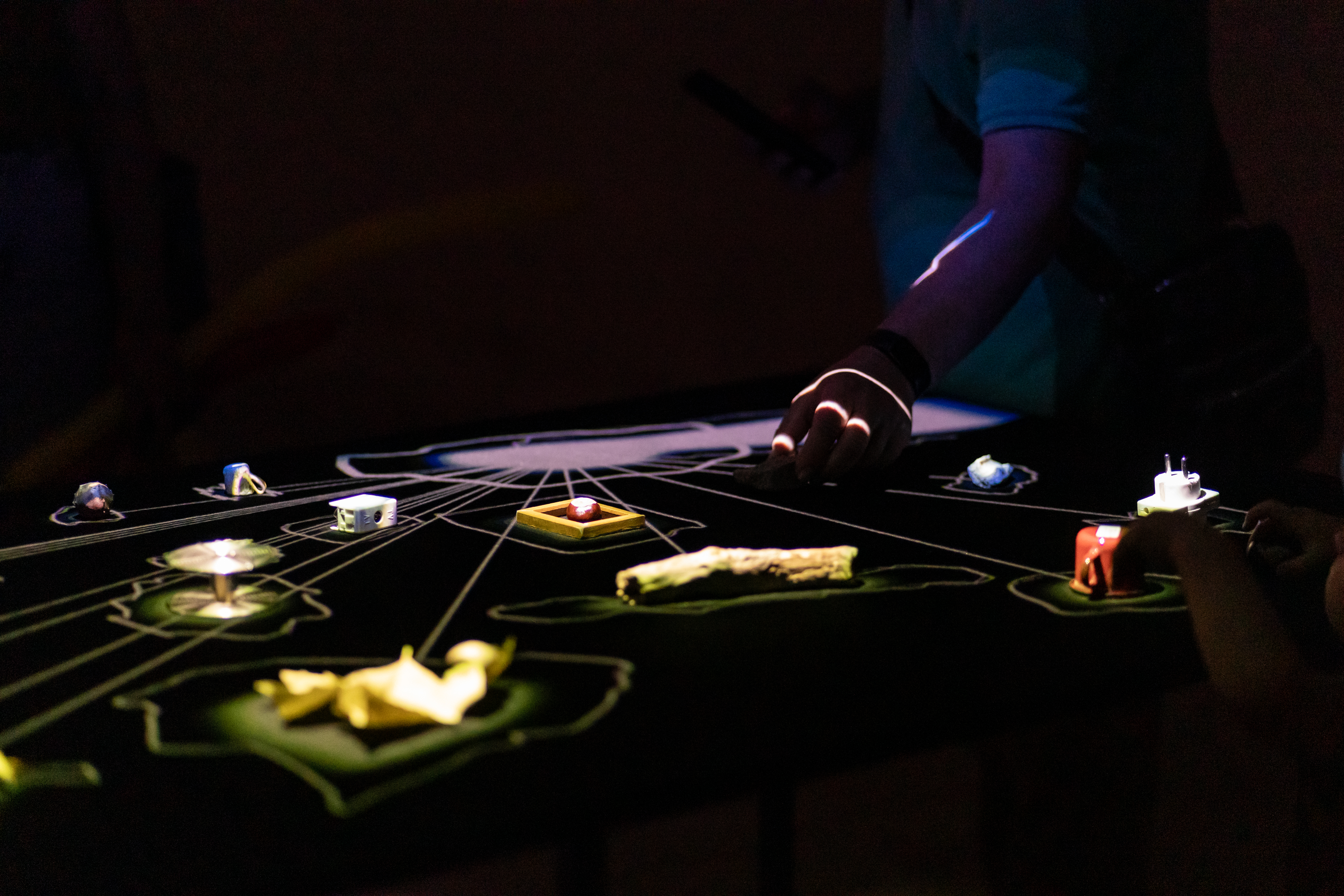
26 September – 12 October 2024, Places of Care, Bucharest, Romania
Shown in the group exhibition Places of Care at the Dimitrie Leonida National Technical Museum, curated by Andrei Tudose and organised by Asociația Marginal.
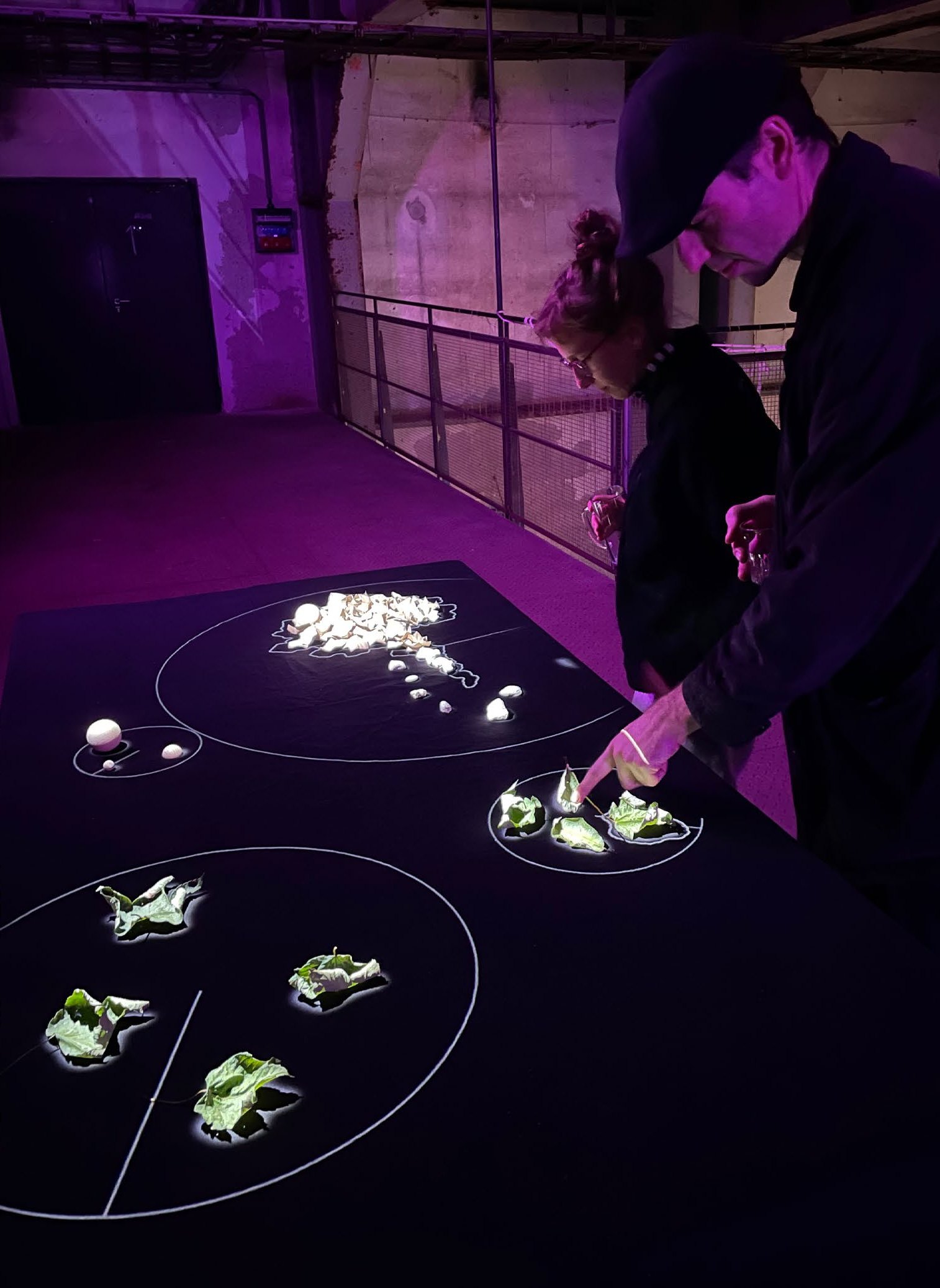
September 2024, Schmiede, Hallein, Austria
First shown at the Schmiede festival in Hallein, where visitors began filling the second table with objects of their own.
beyond_repair art & research collective
Antoni Rayzhekov and Martin Murer are interdisciplinary artists and researchers working at the intersection of music, interaction design, and creative technology. Together, they form the art and research collective beyond_repair, exploring new relationships between everyday objects, hybrid instruments, and artistic expression. Combining perspectives from experimental music, human-computer interaction, and design research, they investigate how everyday materials can become expressive interfaces. Their work aims to contribute equally to artistic practice and academic research.
Well-Tempered Objects, 2024
beyond_repair (Antoni Rayzhekov & Martin Murer)
interactive audiovisual installation
HD projector, infrared camera, computer, custom software, two black tables (200 × 100 cm), two guitar amplifiers, found everyday objects, natural artefacts, audience-donated objects
variable dimensions
Antoni Rayzhekov and Martin Murer. 2025. The Well-Tempered Objects: Using Everyday Things for Tangible Composition. In Proceedings of the Nineteenth International Conference on Tangible, Embedded, and Embodied Interaction (TEI '25), Bordeaux / Talence, France. Article 80, 1–7. doi.org/10.1145/3689050.3705994
The research related to this artwork is realised with the support of III.Lab (Intelligent Interfaces Innovation), funded by AIT Austrian Institute of Technology, University of Salzburg and Land Salzburg under grant number 20102/F2300416-KZP. The exhibition in Bucharest was supported by the French Institute in Romania, Projekt Atol, the Bucharest Technical Museum and AFCN. Special thanks to the Schmiede festival in Hallein and all participating smiths.